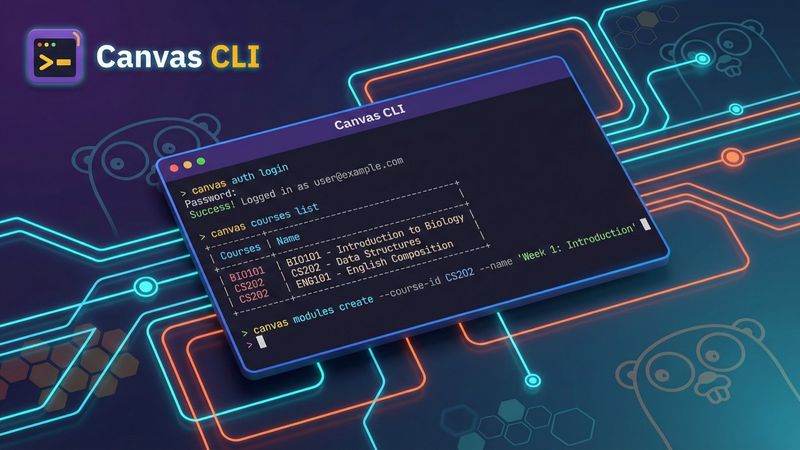
I built alegra-cli in a week with Claude Code, most of it in a single night: 125 commits and 310 tests. Alegra is a cloud accounting and invoicing platform used across Latin America, and the CLI is a command-line client for its API.
It covers the whole Alegra v1 surface: around 40 resources (contacts, invoices, items, payments, taxes, reports, and the rest), each with a uniform list / get / create / update / delete plus resource actions like invoices void or invoices emit. Every list filters, takes natural date ranges (--since last-month), paginates, and counts. You can bulk-import and export CSV, run the electronic-invoicing flow with idempotent stamping so the same invoice never gets emitted twice, and pull per-country reference catalogs (units, ID types, tax types) fully offline for Colombia, Mexico, Peru, Costa Rica and more.
The token lives in your OS keyring, the HTTP core has an adaptive rate limiter and idempotency-aware retries, and shell completion fills in your real invoice and contact IDs as you type. It’s agent-first by design: alegra mcp runs the whole command tree as an Alegra MCP server, there’s an installable skill for Claude Code, Cursor, Codex and others, and alegra agent guard generates hooks that hard-block irreversible operations like delete or emit. Every request can be previewed with --dry-run, which prints the exact curl with the token redacted. The full command reference and guides are in the docs.
The night got it working. Making it trustworthy was the next step: I validated the whole CLI against Alegra’s entire OpenAPI and turned that spec into a hard requirement. A contract test and a spec-drift guard fail CI if the code stops matching it.
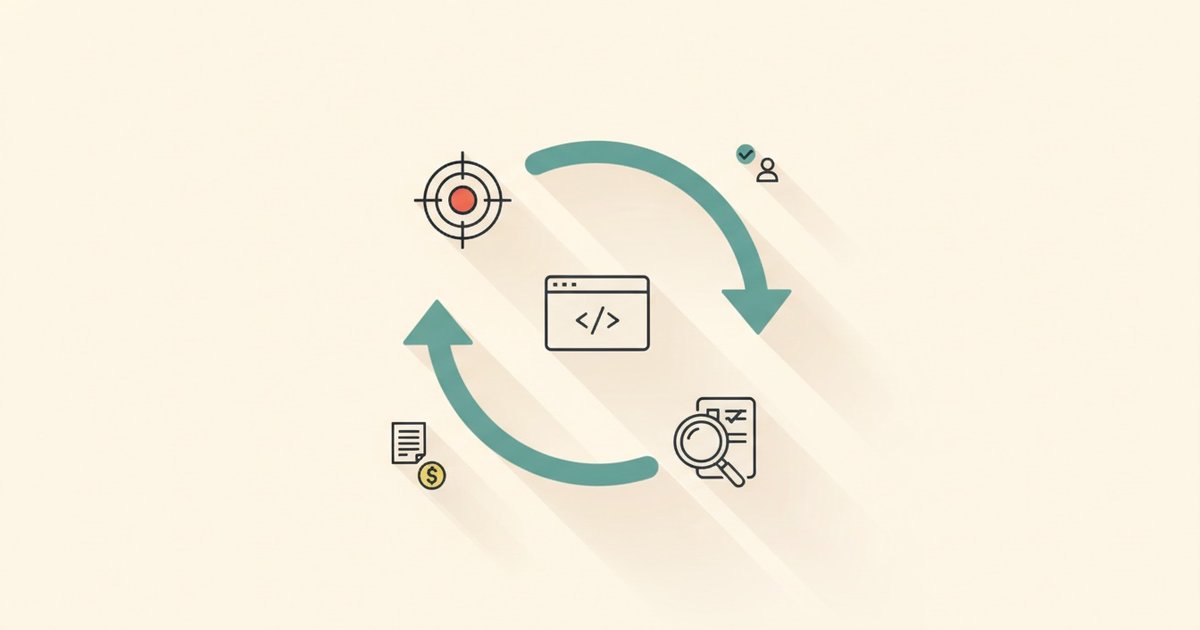
The build ran as an agentic loop. I used /goal to set a target the agent works toward on its own, and /code-review to find what it got wrong. Set a goal, review the result, fold the review into the next goal. Around that loop I kept the quality bar high and wired the standards into CI so they got checked on every commit.
I wrote before about the enforcement layer, why hooks and commits matter when an agent does the typing. This post is the case study: the architecture, the standards, and that loop, across a whole project.
The architecture that made speed cheap
alegra-cli wraps the Alegra API. The core is a generic typed client, Resource[T]. Each resource (a contact, an invoice, a product, a payment) is exactly three files: a data type, a command, and zero edits to shared code. The twenty-seventh resource is as cheap to add as the first.
That keeps the agent fast without breaking things. When pagination, auth, retries, and output formatting all live in one place, the agent can’t introduce a wrong variant on resource number twenty-seven. The architecture absorbs the mistakes.
Alegra’s API returns some values in more than one shape. Some IDs come as integers, others as strings; some fields are an {id, name} object, sometimes just a number. A few flexible Go types absorb those variations before they reach any business logic, so the agent never had to handle them case by case.
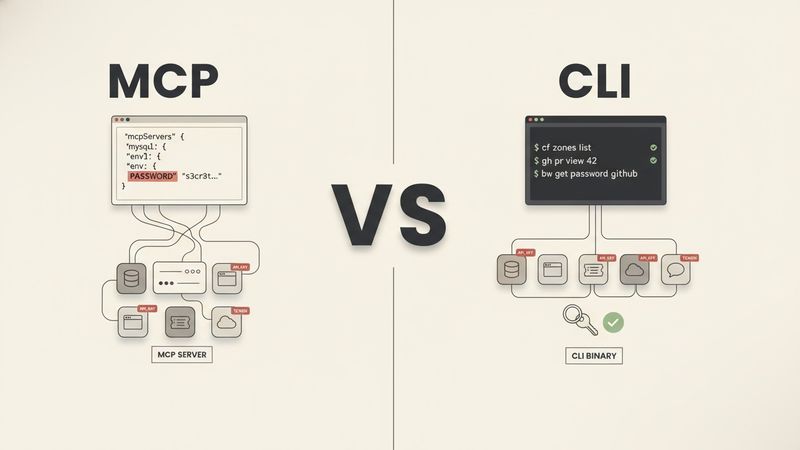
From day one the CLI is also an MCP server: alegra mcp exposes every command as an agent tool. That was the goal the whole time, something agents could drive directly. (I make the broader case for CLIs over MCPs in a separate post.)
Keeping the bar high
The rule I worked by was simple: never accept “it works.”
Every time the agent finished something, I asked what was still wrong with it, had it fix that, and asked again. When a review came back strong, I read it as a list of gaps to close. So I closed them and ran the review again. The next score was higher, and I asked again.
It sounds like a personality thing. Really it’s just a loop, and most of it runs on its own once you set it up. The next two sections are how.
Enforcement the agent can’t argue with
Standards only hold if a machine checks them, because an agent will tell you the tests pass whether or not they do.
So the standards became gates:
- 80% coverage gate that fails CI if it drops. Coverage went from 39.8% to over 80% in the first week and stayed there.
- golangci-lint clean on every commit, enforced by a pre-commit hook.
- Race detector on Linux, macOS, and Windows.
- Fuzz tests on the value types. They found a
NaN/Infbug in minutes that an example-based test would have missed. - Contract tests against Alegra’s documented schemas, plus a spec-drift guardrail that runs without touching the network.
- Signed releases with an SBOM, and
govulncheckin CI.
The agent can claim anything. The gate is what I actually trust, and it’s what makes it safe to let the agent move fast.
/goal: set a target, let it run
/goal sets a stop condition on the session. I give it a target I can verify (reach 80% coverage, finish issue #22, fix every finding from the last review) and the agent keeps working until the condition is true. Inside that goal it makes its own calls: which tests to write first, how to structure the edge cases, which files to touch.
This is what let me iterate without babysitting. My job became setting targets and checking results. The targets have to be ones a machine can confirm, which is why the gates above matter so much. CI can prove “80% coverage,” so it works as a goal. “Make it better” gives the agent nothing to hit.
/code-review: a review panel on demand
The other workhorse was the /code-review:code-review skill. It fans out several agents in parallel, each hunting a different class of problem (bugs, removed guards, cross-file breakage, language footguns), then has them adversarially verify every finding before it reports, so most of the noise gets filtered out before it reaches me.
I ran it on every meaningful PR. On the security release it earned its keep: it caught a guard hook that failed open, one that would have let a destructive command through on a specific input. That would have shipped. Each review then fed the next /goal: fix everything it found, don’t stop until it’s clean.
Those four pieces stack on each other. I define what good means, a machine checks it, the agent works toward it, and a separate pass verifies the result.
Security from the start
The CLI keeps the API token in the OS keyring, never in a config file. --dry-run prints the exact curl before sending anything. Deletes ask for confirmation. Later I added alegra agent guard, which generates PreToolUse hooks that block irreversible operations at the agent host, before the command ever reaches the CLI. The MCP layer also marks write tools so hosts that understand them ask first.
Why it was fast and still safe
Moving that fast sounds like skipping steps. I didn’t. Every change went through a PR to develop, CI had to be green before merge, tags triggered the release, and main was promoted cleanly. One time the agent committed straight to develop. I reverted it and sent the work through a PR like everything else.
The speed came from three things stacked together: an architecture where extending is nearly free, enforcement that made it safe to move, and /goal plus /code-review for autonomy and verification. The system around the model is what produced the pace.
If you’ve built with an agent and got mediocre output, the model probably wasn’t the problem. What matters is how well you direct it and how strong your guardrails are. That part is on you.
alegra-cli is MIT and lives at github.com/jjuanrivvera/alegra-cli. Install it with Homebrew, Scoop, Docker, or go install. If you use Alegra and work with agents, it’s a starting point.